
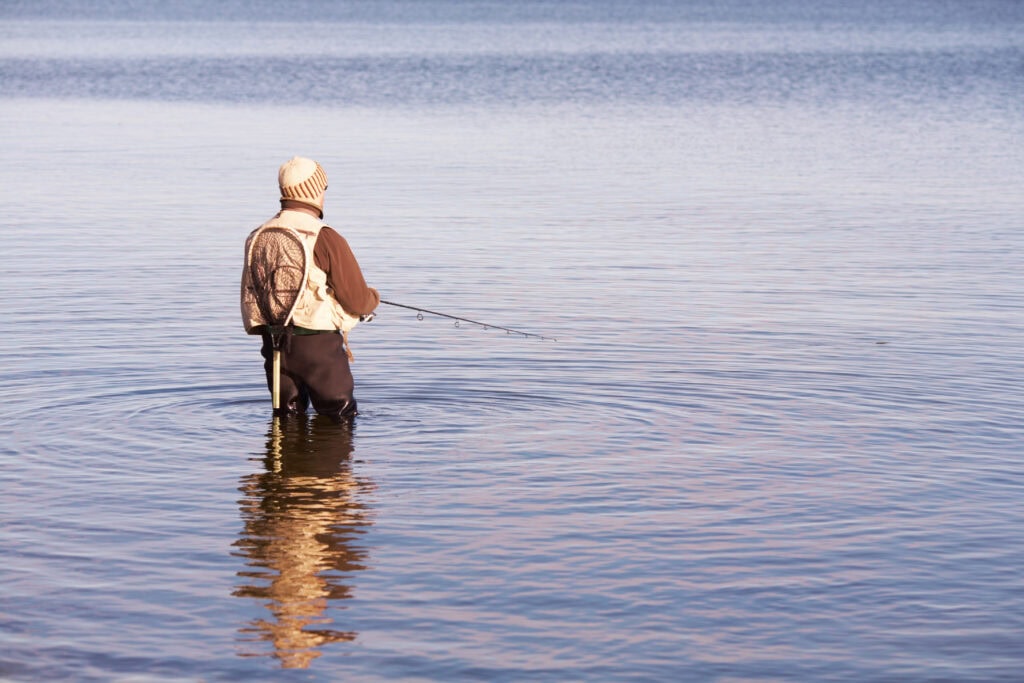
Wade fishing in Redfish Bay puts you in the water, on the flats, with nothing between you and the fish but a few feet of clear Gulf Coast water. It is one of the most accessible ways to fish the Texas coast, and Redfish Bay is one of the best places in Texas to do it, with shallow grass flats, protected water, and multiple easy access points within a short drive of camp. If you have never wade fished before, this is a good place to learn.
Why is Redfish Bay Great for Wade Fishing?
Redfish Bay is part of the larger Aransas Bay ecosystem, which includes Aransas Bay, Copano Bay, Mesquite Bay, and several others feeding into the system. Redfish Bay itself sits closer to the Gulf, which means the water tends to be saltier and clearer than the bays farther inland. That clarity is part of what makes it such a good wade fishing territory: on calm mornings, you can see fish moving across the flats before you ever make a cast.
The shallow grass flats, oyster beds, and mangrove-lined shores of Redfish Bay create ideal habitat for flounder, redfish, and spotted seatrout. The bay system is calm and protected enough that conditions are manageable for first-time waders most of the year, and the shallow water means you are fishing in two to three feet of water across much of the fishable flat. You should also check the activities page for more on what the area around camp has to offer.
Essential Gear for First-Time Waders
You do not need a lot of gear to wade fish effectively, but what you bring matters. A 7-foot medium-action spinning rod paired with a quality reel spooled with 15 to 20-pound braided line and a fluorocarbon leader is a solid starting setup for the species you will encounter in Redfish Bay. A wading belt or wade fishing pack keeps your tackle close without requiring you to carry a tackle box into the water.
Footwear is non-negotiable. Wading boots or sturdy water shoes with closed toes protect your feet on oyster shells and sand, and some waders opt for stingray guards that cover the ankle and lower shin as an added layer of protection. Polarized sunglasses are one of the most practical investments you can make for wade fishing: they cut the glare off the water surface and let you see fish, structure, and bottom composition that you would otherwise miss entirely. Sun protection, a hat, and water are the practical essentials that most first-timers underpack.
Where to Wade: Access Points Within 15 Minutes of Camp
Lighthouse Lakes Park, located along the Redfish Bay Causeway on State Highway 361, approximately six miles south of Aransas Pass, has a long stretch of water access with picnic seating and small piers, and wading out from the bank is straightforward. It is one of the most convenient entry points in the area for anglers staying at Redfish Bay RV Park, putting you directly on the edge of the shallow flat system that connects to the bay.
Conn Brown Harbor in Aransas Pass is another solid access point, with thousands of redfish inhabiting the flats nearby and a public fishing pier on site. The flats on either side of the Aransas Channel off State Highway 361 are also well-known wade fishing areas that local anglers return to season after season. For turn-by-turn orientation from camp, the directions and attractions page has everything you need to get your bearings before you head out.
Common Species and How to Catch Them
Redfish, speckled trout, and flounder are the three species most consistently targeted by wade fishers in Redfish Bay, and all three can be caught on the same flat in the same session. Redfish cruise the shallow grass beds looking for crabs and shrimp, and on calm, clear mornings, you can sight-cast to individual fish rather than blind-casting and hoping. Speckled trout hold near shell substrate and grass edges, and flounder tend to lie flat on the bottom near drop-offs and channel edges, waiting to ambush passing bait.
Live shrimp is the most versatile bait for all three species and works reliably from the bank and in the wade. For artificial lures, a soft plastic on a light jighead covers a lot of ground efficiently and allows you to cover flat water at a good pace. Gold spoons are a proven redfish lure in clear shallow water. Early morning, within the first two hours after sunrise, is consistently the most productive window for wade fishing the flats, regardless of season.
Is Wade Fishing Safe? Safety Basics Worth Knowing
Wade fishing is a low-risk activity when you approach it with a little preparation, but there are a few things worth taking seriously. Stingrays are the most common hazard for wade fishers on the Texas coast, and they are present in Redfish Bay. Stingrays bury themselves in sand and mud and will not attack, but they will sting if stepped on. The stingray shuffle, which means keeping your feet on the bottom and sliding them forward rather than lifting and stepping, is the standard defense and causes rays to swim away before you reach them. It is a simple habit to build and the most effective protection available.
Some waders use stingray guards that cover the shin and ankle as additional protection, and these are available from several manufacturers. Beyond stingrays, Texas Gulf Coast weather can change quickly. Afternoon thunderstorms are common in summer, and lightning on open water is a serious risk. Check the forecast before you head out, keep an eye on the sky while you are fishing, and get off the flat and back to shore at the first sign of lightning. Wading alone is not recommended for first-timers; going with someone who knows the area removes most of the remaining uncertainty.
Texas Saltwater Fishing License Requirements
Anyone 17 or older fishing in Texas coastal waters needs a valid Texas fishing license with a saltwater endorsement. This applies to wade fishing in Redfish Bay, the same as any other method. Licenses are available through the Texas Parks and Wildlife Department at tpwd.texas.gov, where you will also find current pricing, package options, and regulation information for the species you are targeting. Size and bag limits for redfish, speckled trout, and flounder change periodically, so checking TPWD before your trip is the right move regardless of how recently you last fished the coast.
Book Your Stay at Redfish Bay RV Park
Redfish Bay RV Park puts you minutes from some of the best wade fishing flats on the Texas Gulf Coast. Check availability and reserve your spot through our website.
Frequently Asked Questions
What fish can you catch while wade fishing in Redfish Bay?
Redfish, speckled trout, and flounder are the primary targets on the flats. Black drum and sheepshead are also present, particularly around oyster structures and hard bottom. All three of the main species can be caught on the same flat in a single session.
Do I need a guide for wade fishing in Redfish Bay?
No, but a guide is useful if you are new to the area and want to learn the flats efficiently. Guided trips compress the learning curve significantly by putting you on fish from the start rather than spending sessions learning where to look. If you prefer to go on your own, the public access points around the Aransas Pass and Lighthouse Lakes area are well-suited to self-guided wading.
What is the best time of year to wade fish in Redfish Bay?
Redfish Bay produces year-round, but spring and fall are the most consistently productive seasons for wade fishing. Fall, from September through November, is particularly strong as water temperatures drop and fish feed aggressively before winter. Summer mornings can be productive before the heat sets in, and winter fishing is slower but not absent.
Are stingrays a real risk while wade fishing?
Yes, stingrays are present in Redfish Bay and should be taken seriously. The stingray shuffle, sliding your feet along the bottom rather than stepping, is the most important precaution you can take and is effective at alerting rays before you make contact. Stingray guards provide additional protection. Most wade fishers who practice the shuffle regularly fish for years without an incident, but the risk is real and worth managing with consistent habits.