
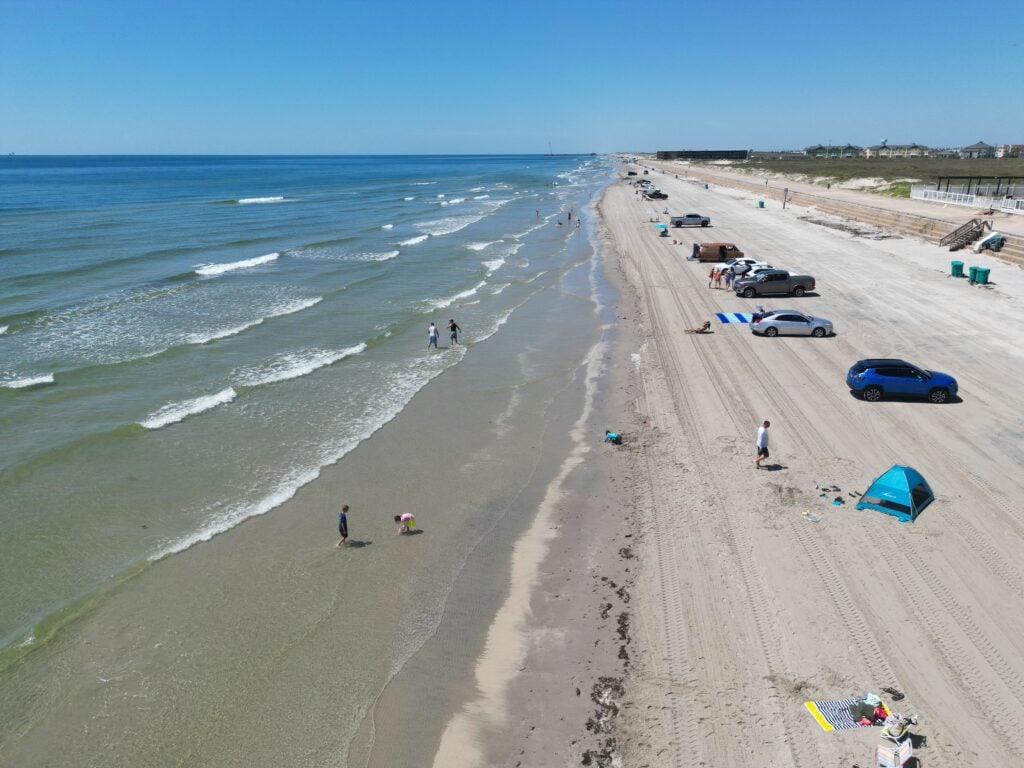
If you’re staying at Redfish Bay RV Park and considering a day at Mustang Island State Park, a little planning will make the trip much easier. The park works well for swimming, fishing, paddling, birdwatching, and camping, but ferry traffic, capacity limits, and changing beach conditions can affect your visit. Here’s what to know before you load the car.
About Mustang Island State Park
Mustang Island State Park protects nearly 4,000 acres of barrier-island habitat and offers more than five miles of Gulf coastline. Texas Parks and Wildlife acquired the original property in the 1970s, and the park opened to the public in 1979. Today, visitors come for swimming, surfing, fishing, paddling, camping, beachcombing, and birdwatching, especially during the spring and fall migrations.
It is worth knowing the difference between Mustang Island State Park and Padre Island National Seashore because visitors sometimes confuse the two. Mustang Island State Park is a Texas state park with developed campsites, restrooms, showers, day-use facilities, and a relatively compact section of coastline, while Padre Island National Seashore lies farther south and protects a much longer, more remote stretch of barrier island where four-wheel drive is recommended on many stretches.
Getting There From Redfish Bay
The most direct route from Redfish Bay RV Park in Aransas Pass usually involves taking Highway 361 to the Port Aransas Ferry, crossing the Corpus Christi Ship Channel, and then continuing south on Highway 361 to the park entrance. The ferry is free and operates 24 hours a day, seven days a week, weather permitting, and the crossing itself usually takes less than 10 minutes, though the wait can be much longer during summer weekends, holidays, and other busy travel periods.
The full drive can take around 30 to 40 minutes when ferry traffic is light, but it’s better to treat that as an estimate rather than a guarantee. You can also avoid the ferry by driving south through Corpus Christi, crossing the JFK Causeway onto North Padre Island, and then heading north toward Mustang Island State Park, a route that’s longer in miles but sometimes faster when ferry traffic is backed up.
Make a Day-Use Reservation Before You Go
Mustang Island State Park is open daily from 8 a.m. to 5 p.m. The park often reaches capacity during spring and summer, and Texas Parks and Wildlife strongly recommends reserving a day pass in advance to guarantee entry.
The current entrance fee is $7 per person for visitors aged 13 and older, with children 12 and younger admitted free, and camping charges are separate from the daily entrance fee. Prices can change, so confirm the current rate when reserving your pass. For RVers already settled at Redfish Bay, a day-use visit is usually the easiest choice, since you can enjoy beach access, fishing, and paddling without breaking down your campsite and moving the entire rig.
Day-Use Versus Camping
Mustang Island State Park has 48 developed campsites set behind the dunes about 400 yards from the water rather than directly on the beach, each with water, 50-amp electrical service, a picnic table, an outdoor grill, and a shade shelter, with restrooms and hot showers nearby. The park also has 50 primitive drive-up campsites spread along a 1.5-mile section of beach. These are undesignated, without hookups, and not reservable, with restrooms anywhere from about 50 yards to 1.5 miles away, depending on where you camp.
Primitive sites sometimes close because of weather or beach conditions, so call the park before relying on them. For travelers staying at Redfish Bay, returning to full hookups and a more protected campsite after a beach day may be more comfortable than moving to the park’s exposed primitive area.
Beach Access and Driving Conditions
Vehicles are allowed on designated portions of the beach, which makes it easier to carry chairs, coolers, fishing equipment, and shade canopies to your spot, though beach access is still subject to current sand, tide, and weather conditions. The park may temporarily close vehicle access or primitive camping areas when the beach becomes difficult or unsafe to navigate, so check current park alerts or call before your visit if driving onto the sand is important to your plans.
ATVs and similar off-highway vehicles aren’t permitted simply because the beach is sandy. Normal traffic laws still apply, and visitors should use a street-legal vehicle, remain in designated areas, watch for pedestrians, and avoid driving on dunes or protected vegetation.
Swimming, Fishing, Paddling, and Birdwatching
Swimming is popular at Mustang Island State Park, but there are no lifeguards, so visitors swim at their own risk, and Gulf conditions can change quickly. Check current surf, wind, and rip-current information before entering the water, keep children close, and don’t assume calm-looking water is hazard-free.
The park also offers surf and shore fishing. Fishing license requirements can vary depending on where and how you’re fishing within a Texas State Park, so rather than relying on a blanket rule here, confirm current requirements directly with Texas Parks and Wildlife before you fish. Paddlers can explore the Mustang Island State Park Paddling Trail, which includes three routes totaling about 20 miles along the western shoreline of the island in Corpus Christi Bay, passing through shallow-water fishing areas and coastal bird habitat. Birdwatching is especially productive during spring and fall migration, though shorebirds and other coastal species can be seen throughout the year.
What to Bring and What Is Available
Full restrooms and hot showers are located near the developed campground, portable toilets are positioned along approximately two miles of beach, and a beach bathhouse with full restrooms is located near park headquarters. Natural shade is limited, so bring a canopy or umbrella, drinking water, sunscreen, chairs, and any food you need for the day. Secure shade structures carefully, since coastal winds can increase quickly.
The park store sells some supplies and gift items, but it’s better to bring essentials with you rather than assume everything will be available. Before heading out, check the current activities schedule at Redfish Bay, since, depending on what’s planned at the RV park, you may decide that some days are better for staying close to camp.
Book Today with Redfish!
Check current rates and reservations at Redfish Bay RV Park, and visit the directions and area attractions page for more ideas during your stay.
FAQ
How much is the entrance fee at Mustang Island State Park?
The current daily fee is $7 per person for visitors aged 13 and older. Children 12 and younger enter free. Camping fees are charged separately, and park entry fees are added to the campsite rate.
Should you reserve a day pass?
The park often reaches capacity during spring and summer, so reserving a day pass in advance is the best way to guarantee entry.
Can you drive on the beach at Mustang Island?
Vehicles are generally allowed on designated beach areas, but access may be closed due to weather, tides, or sand conditions. Check current park alerts before driving on the beach.
Is camping available at Mustang Island?
Yes. The park has 48 developed campsites with water and electricity and 50 primitive drive-up beach sites. The developed sites are behind the dunes, while the primitive sites are on an undesignated section of beach.
Is the beach safe for children?
There are no lifeguards, so swimming is at your own risk. Adults should supervise children closely and check current surf and rip-current conditions before entering the water.
Come Back to Full Hookups
A day at Mustang Island State Park pairs well with a stay at Redfish Bay RV Park because you can experience the open Gulf beach without relocating your entire RV setup. After swimming, fishing, paddling, or birdwatching, you can return to full hookups and the comforts of your campsite in Aransas Pass.