
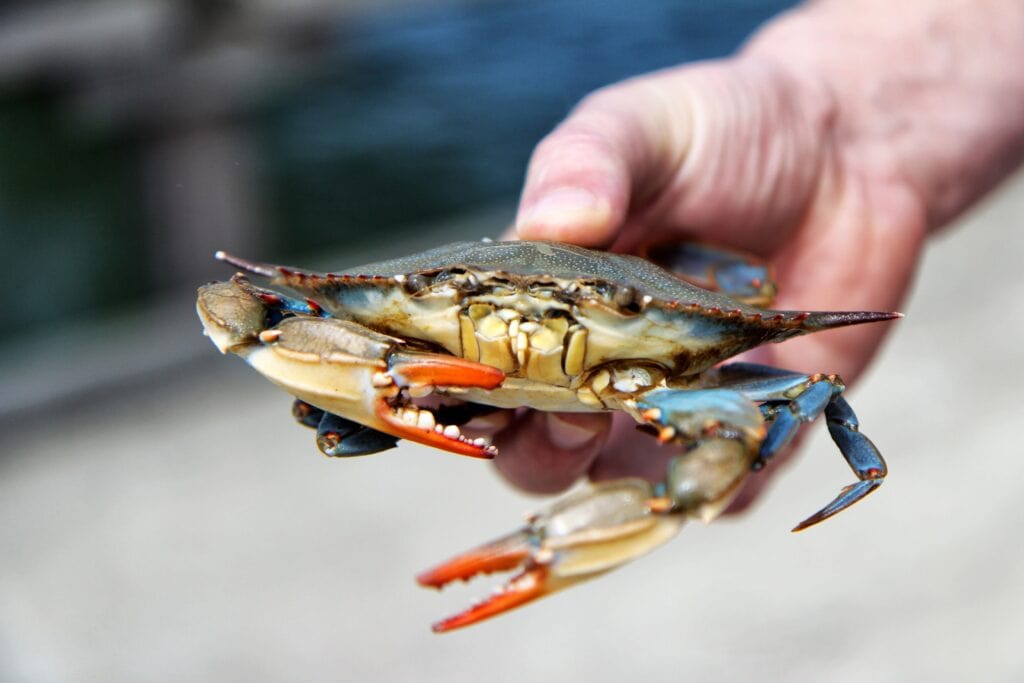
Crabbing in Aransas Pass is one of the easiest ways to spend a fall morning near the water without buying much gear or learning a complicated technique. If you want to know how to crab the Texas coast, you can start with a baited line or simple net, a bucket, and a little patience. It is especially fun with kids because they can watch the crab grab the bait and help bring it toward the surface. September through November is a good stretch to try it. This guide covers the gear you need, beginner-friendly places to go, Texas blue crab rules, tides, bait, and the basic technique for bringing your first crab onto the pier or shoreline.
Why Fall is a Good Time to Go Crabbing
Fall is a comfortable time to try crabbing along the coast. The water remains warm into September and October, and blue crabs stay active. Summer crowds also begin to thin after Labor Day. An early morning trip can make September heat easier to handle, while October and November often bring more comfortable weather for standing along a pier or bulkhead.
Texas does not have a fall-only recreational crabbing season. Crabbing is available throughout the year, although special rules apply to crab traps during the annual February cleanup closure. If someone in your group would rather spend a morning with a rod and reel, the park’s guide to wade fishing in Redfish Bay covers that separately.
What You Need to Go Crabbing
Getting started does not require much. A basic setup can be put together for very little money, and most of it fits in a bucket.
-
The simplest setup
The simplest setup uses a length of line, a small weight, a bait tie, and a long-handled dip net. Tie the bait securely near the end of the line and lower it into the water. Once a crab grabs hold, slowly bring it close enough to scoop from underneath with the net.
-
Drop nets
A drop net makes the process even easier. The net lies flat on the bottom with bait secured in the middle. When a crab crawls onto it, lift the net steadily so the sides rise around the crab. Crabbing with a drop net is a good choice for beginners because you do not have to depend on the crab holding onto the bait all the way to the surface.
-
Bait
Raw chicken necks are a classic blue crab bait. They are inexpensive, tough enough to stay on the line, and easy to tie securely. Chicken legs, turkey necks, fish heads, and fish carcasses can work too. Older bait with a stronger smell often gets plenty of attention from crabs.
-
Everything else
Bring a bucket or cooler, ice, gloves or long tongs, a ruler or crab gauge, closed-toe shoes, sun protection, and a trash bag. Tongs are especially useful for beginners who are not comfortable handling a crab by the shell. Keep your bait scraps and other trash contained so nothing gets left behind at the water.
Where to Go Crabbing Near Aransas Pass
Conn Brown Harbor Point Park is a convenient place to start in Aransas Pass. The park is off Bigelow Street at Conn Brown Harbor. The City of Aransas Pass lists a fishing pier, restrooms, fish-cleaning tables, boat ramps, and miles of shoreline around the harbor. The protected harbor setting and nearby facilities make it easier for families who are learning the basics. You can see more of the surrounding area on Redfish Bay RV Park’s directions and attractions page.
Lighthouse Lakes Trails Park, at 1 Haines Way, is another public access point east of Aransas Pass along Highway 361 toward the ferry. TPWD identifies the city-maintained park as an access point along the Redfish Bay Causeway. It has shoreline access and a parking area, and the shallow water makes it worth considering for a simple line or net setup. The Lighthouse Lakes Paddling Trail guide covers the area in more detail.
If you want to make a longer outing of it, cross the ferry to Roberts Point Park, 301 J.C. Barr Boulevard in Port Aransas. The public waterfront park has restrooms, a long walking and fishing trail, granite jetties, and plenty of room along the water. To the north, Rockport Beach Park has an 800-foot fishing pier and public restrooms. The beach charges a per-vehicle entry fee. Farther up the coast, Goose Island State Park, 202 South Palmetto Street, has shoreline access and a fishing pier. The state park charges a day-use entry fee and often reaches capacity, so reserving a day pass is a good idea if Goose Island is part of your plan.
Best Tides and Times of Day
Moving water is usually a better target than slack water. An incoming tide means the water is rising and moving toward shore. An outgoing tide means it is falling and moving away. Slack tide is the quieter period around high or low tide when the water movement slows.
Instead of choosing a fixed hour, look for a period when the tide is moving. Early morning and the last couple of hours before dark are also comfortable times to be outside, especially during warmer fall days. Use NOAA tide predictions for Aransas Pass to plan around the local tide rather than relying on a tide chart that will quickly become outdated.
Texas Crabbing Rules You Need to Know
Texas Parks and Wildlife requires anyone taking crabs from saltwater for non-commercial purposes to have a valid fishing license with a saltwater fishing endorsement. The rules also cover the size and condition of crabs you may keep and the devices you can use.
Blue Crab Size and Keeper Rules
Blue crabs have no daily bag limit or possession limit. A keeper must measure at least 5 inches across the widest part of the body, from the tip of one lateral spine to the tip of the other. Egg-bearing females cannot be kept. These are often called sponge crabs because the mass of eggs under the abdomen can look like a sponge. You also cannot possess a female blue crab whose abdominal apron has been removed.
Stone Crabs and Legal Gear
Stone crabs follow a different rule. Only the right claw may be kept, and it must measure at least 2 1/2 inches from the claw tip to the first joint behind the immovable claw. The rest of the crab must immediately go back into the water.
Legal crabbing devices include crab lines, crab traps, nets, folding panel traps, sand pumps, and umbrella nets. A crab line is simply a baited line with no hook attached and has no additional device restrictions. Folding panel traps and umbrella nets may not exceed 16 square feet of overall surface area.
Crab Trap Rules in Aransas County
A recreational crabber may fish no more than 6 crab traps at a time under the statewide rule. Each trap may hold no more than 18 cubic feet. Each crab-retaining chamber needs at least 2 escape vents measuring at least 2 3/8 inches in diameter. A gear tag is required within 6 inches of the buoy or pier where the trap is tied, and the tag is valid for 10 days. Crab traps may be pulled only from 30 minutes before sunrise through 30 minutes after sunset.
Aransas County has tighter placement rules in some waters. You cannot fish a crab trap within 200 feet of a marked navigable channel. In the specified stretch of Aransas Bay that runs from Hail Point past Goose Island, Fulton, Nine Mile Point, and Rockport, a recreational crabber may use no more than 3 traps at once. Those traps must be securely tied to a fixed structure such as a pier, dock, or bulkhead. Texas also closes coastal waters to crab traps for 10 consecutive days beginning on the third Friday in February as part of the annual abandoned crab trap cleanup.
How to Actually Catch One
Start by tying your bait securely to the line or placing it in the center of your drop net. Lower it until it reaches the bottom, then give the crabs a few minutes to find it. With a hand line, watch for the line to tighten or feel heavier. Pull it in slowly and steadily. If you jerk the line, the crab may simply let go and disappear.
Get your dip net into position before the crab reaches the surface. Bring the net underneath the crab and lift. With a drop net, use one smooth upward pull once you know a crab is feeding. Check the crab against your ruler or gauge and return anything undersized or protected to the water promptly. Blue crabs can reach surprisingly far with their claws, so approach from behind the shell or use long tongs. Closed-toe shoes help around wet concrete, and kids should stay close to an adult near piers, bulkheads, and open water. Bring water and sun protection even on cooler fall mornings.
Keeping What You Catch
Keep legal crabs cool, damp, and shaded until you are ready to cook or clean them. Do not leave live crabs sitting in fresh water. Plan to use your catch the same day.
A simple boil is all you need if you want to eat them the traditional way. If the crabs do not cooperate that morning, the guide to local shrimp boats and dockside markets in Aransas Pass gives you another way to bring local seafood back for dinner.
Frequently Asked Questions
Do you need a license to go crabbing in Texas?
Texas requires a valid fishing license with a saltwater fishing endorsement when taking crabs from saltwater for non-commercial purposes.
What is the best bait for blue crabs?
Chicken necks are a simple and dependable bait for beginners. Chicken legs, turkey necks, fish heads, and other fish scraps can also attract blue crabs.
What is the best tide for crabbing?
A moving tide is a good time to try. Both incoming and outgoing water can work, while slack tide has less water movement.
Can kids go crabbing?
Crabbing is simple enough for kids to help with bait, watch lines, and spot crabs as they come toward the surface. Adults should handle the claws and supervise children closely around the water.
Do you need a crab trap to catch blue crabs?
A baited crab line and dip net are enough to get started. A drop net is another simple option if you want something that holds the crab more securely as you lift it.
Is there a crabbing season in Texas?
Crabbing is generally available year-round in Texas. Crab traps are the exception during the short statewide cleanup closure that begins on the third Friday in February.
Book your stay
Crabbing is an easy fall activity to work into a few days in Aransas Pass. When you are ready to plan your trip, visit the Redfish Bay RV Park rates and reservations page to check current booking information and reserve your stay.