
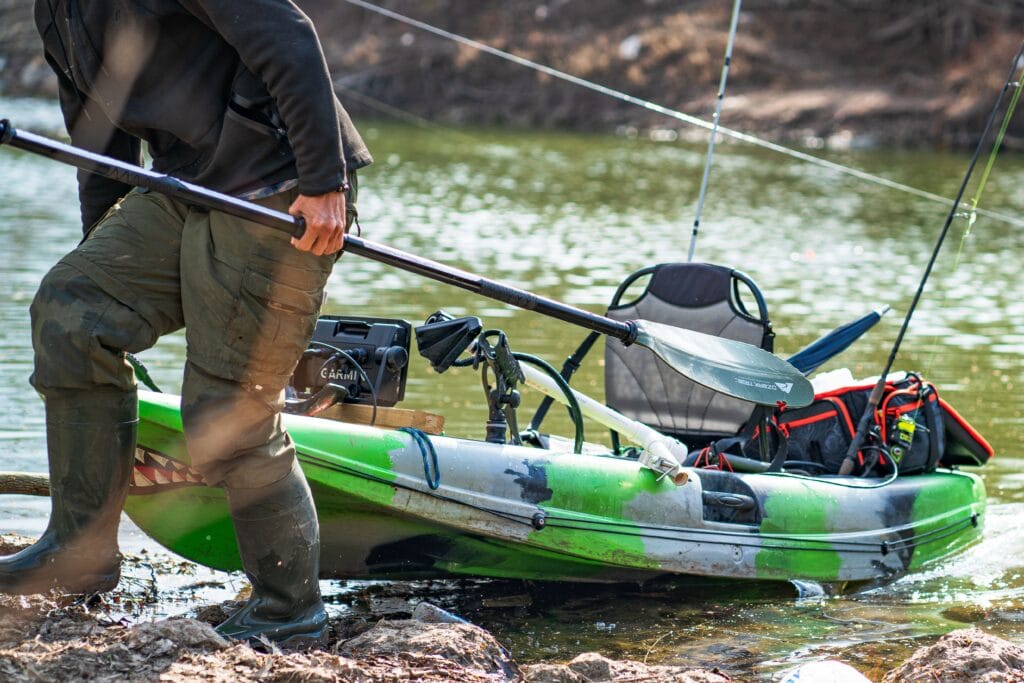
Redfish Bay is close to ideal kayak fishing water. It is shallow, protected, full of seagrass, and largely inaccessible to the deeper-draft boats that work the surrounding bays, which means a paddler can reach productive flats that see comparatively little pressure. Redfish Bay RV Park sits minutes from the main launches, so a morning on the water starts with a short drive rather than a trailer and a plan. Here is where to put in, what you can expect to catch, and how tide and wind shape the day.
How Kayak Fishing Differs From Wading Here
A kayak changes what you can reach. Wading limits you to the flat you walked onto, while a kayak lets you cover several in a morning, cross channels to reach back lakes, and move on quickly when a spot is not producing.
The tradeoff is stealth and stability. A kayak sits higher, catches wind, and drifts, so holding position over a productive pothole takes a stakeout pole, an anchor, or a drift you set up deliberately. Many anglers here do both, paddling out and then getting out to wade a promising stretch. Our post on wade fishing in Redfish Bay covers that side of it, and the two approaches complement each other more than they compete.
Where to Launch
Lighthouse Lakes Trail Park is the primary launch for the area, on the north side of the State Highway 361 causeway, roughly five miles from the HEB in Aransas Pass. It has parking and direct water access, and there is no fee to use it. Worth knowing before you go: the trail markers sit across the Aransas Channel from the put-in, so reaching the loops means crossing an active boat channel. Cross it directly, cross it quickly, and treat it as you would a road. A second access point at Crabman Marina, on the south side of Highway 361 about four miles from the HEB, opens onto the South Bay Loop.
If you would rather launch away from the trail system, Aransas Pass has several public ramps that work fine for a kayak, and our guide to where to launch a boat in Aransas Pass walks through those options. For loop distances and paddling times, our Lighthouse Lakes guide for first-time kayakers has the detail.
What You Are Fishing For
Redfish are the main draw and the reason the bay carries the name. They work the shallow grass and sand potholes in water often thin enough that you will see backs and tails before you see fish, which makes sight casting from a kayak realistic on a calm morning. Gold spoons, soft plastics on light jig heads, and topwaters early all have a following here, and weedless presentations matter given how much grass is on the bottom.
Speckled trout hold along grass edges, in slightly deeper guts, and around moving water, and they tend to be more sensitive to conditions than reds. Flounder sit on sandy bottoms near drop-offs, channel edges, and drains where bait funnels past, and they respond to a slow presentation worked along the bottom. Flounder are subject to seasonal harvest restrictions in Texas, so check current Texas Parks and Wildlife regulations before you keep one and make sure you are carrying a fishing license with a saltwater endorsement.
Reading the Tide
Tides here are not dramatic in range, and on the Texas coast wind often has more influence on water level than the tide chart does. That does not make the chart useless. Moving water concentrates bait and turns fish on, so planning a session around a tide change, in either direction, is usually more productive than fishing a slack period.
Water depth is the practical concern for a kayak. Extreme low water is common in these back lakes, and a strong outgoing tide combined with an offshore wind can leave a paddler dragging across mud that was floating a kayak an hour earlier. Check the tide before you go, note when the low falls, and give yourself a route back that does not depend on water that may not be there.
Working With the Wind
Wind is the biggest variable on a kayak here. Summer mornings on this stretch of coast are typically calmer, with the southeasterly breeze building through the day, so early starts are worth the alarm. Winter cold fronts bring hard north winds that push water out of the shallows and can make an easy paddle out into a difficult paddle back.
Plan the direction, not just the speed. Paddling into the wind on the way out means the return trip is assisted rather than punishing, which is the opposite of what most people do by instinct. The mangrove islands and back lakes offer real protection when the open bay gets rough, so knowing where the sheltered water is gives you somewhere to go rather than a reason to quit.
What to Bring
Fishing from a kayak adds gear to the standard paddling list. A stakeout pole or a small anchor lets you hold over a spot; a milk crate or a purpose-built tackle setup keeps things reachable; and rod leashes are cheap insurance. A landing net and a pair of pliers make handling fish in a small boat considerably easier, and a stringer or small cooler covers you if you plan to keep any.
Everything else comes down to sun, water, and law. Texas requires a Coast Guard-approved wearable life jacket on board for every person, and anyone under 13 must wear one while the kayak is underway. Most experienced paddlers here wear theirs regardless. Bring more water than you expect to drink, sun protection you can reapply, a dry bag or waterproof case for your phone, and a downloaded map, because the channels and mangrove islands look identical in every direction once you are inside them and paddlers lose the markers regularly.
Renting a Kayak Nearby
You do not need to bring your own. Lighthouse Kayak and Tackle rents fishing kayaks in the Coastal Bend and delivers to Aransas Pass and the surrounding area, which works well if you are staying at the park and would rather not tow one. Coastal Bend Kayak has been outfitting paddlers in the Coastal Bend since 2002 and offers guided trips alongside rentals. There are additional outfitters in Port Aransas, a short ferry ride away.
Availability and pricing change seasonally, so contact outfitters directly and book ahead during busy months. Our activities page has more on what is close to camp.
Frequently Asked Questions
Do I need a fishing license to kayak fish in Redfish Bay?
Texas requires a fishing license with a saltwater endorsement for anyone fishing coastal waters, with limited exemptions. Licenses are available online and from local retailers.
When is the best time of day to go?
Early morning is usually best, both for calmer wind and for more active fish. Late afternoon into evening can also produce, particularly in warmer months.
Is Redfish Bay a good place to start kayak fishing?
It can be, with realistic expectations. The water is shallow, and there is no open Gulf exposure, but reaching the trail system means crossing a boat channel, wind builds quickly, boat wakes are real, and it is genuinely easy to lose your bearings in the mangroves. Start with a short session near the launch on a calm morning and build from there.
Can I fish the paddling trail loops?
The loops run through the same grass flats and channels that hold redfish, trout, and flounder, and there is no fee to use the trail.
Book Your Stay
Redfish Bay RV Park puts you a few minutes from the launch, which means you can be on the water at first light and back for coffee before the wind picks up. Check availability and reserve your site to plan your trip.